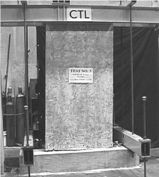
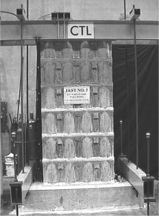
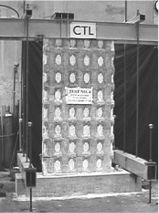
Here are links to two very informative articles that may surprise you. The first takes you to a study conducted by the ICFA that measured the
point of failure by several different methods of walls constructed of each of the three types of ICFs as well as one constructed of wood frame. As expected, all of the
ICFs blow away the frame construction. What we really found satisfying is the similairity in performance between the screen grid (Mikey Block) and the solid panel ICFs.
The second link takes you to a study conducted to compare the moisture absorbtion of EPS and XPS foam. It is commonly thought that the more expenisive XPS has superior insulating properties
to EPS. Quoted R-Values for one pound density foam are typically 3.6 for EPS and 5.0 for XPS, giving it an apparent 39% advantage. This study, however,
measured a 15-year real world side-by-side
application of the two. What the researchers found was for long term exposure, XPS is prone to much higher moisture absorbtion rates.
Moisture absorbtion is the
kiss of death for insulation and the study found that after 15 years in the ground, the XPS had lost 48% of its R-value (2.6), while the EPS lost just 6% (3.3).
Thus, when used below grade or other environments exposed to moisture, it looks like good old EPS is the better choice. And an even better choice is Mikey Block, which is made from 1.5 pound density foam, having an R-value of 4.1 per inch.
"We recently finished our Mikey Block house and we LOVE it". --Matt Docis, Owner
Architect, Richard Jost
FLORIDA APPROVAL! Mikey
Block is now approved for use in the State of Florida. If you are
looking to build a strong, energy-efficient house that will still be
standing after the severe weather that can happen in
Florida, take a look at Mikey Block!
CHOOSING AN ICF: MAKE THE RIGHT DECISION!
When
it comes to choosing an ICF, you have dozens to select from. How do you
know if you are making the right choice? There are a number of factors
you'll want to look for:
1. Insulating Value: If your ICF home doesn't insulate the way you had hoped, you'll be disappointed in the whole process. Remember, R-value is achieved through the use of EPS Foam. Concrete
adds thermal mass and has an effect on R-value, but excess concrete can
actually make your home perform less well. More foam means more
insulation. Mikey Block has more foam than any other ICF.
2. Labor Cost:
Some ICF systems require specialized equipment, trained
crews, and extensive bracing equipment. With Mikey Block you won't
need expensive equipment or high priced labor to complete your
installation. We've had some individual customers install all of their Mikey Block walls themselves, with help only at grouting time!
3.Being Really Green:
If you want to have as little effect on the environment as possible,
choose an ICF that uses less concrete. The manufacture of portland
cement and the production of concrete are extremely energy-intensive
processes. Mikey Block uses half the concrete of most flat panel systems.
4. Factory Support: When
you call us with a question, you'll talk to Mikey Block
people---the ones who've designed the system and have built
with it. We know the product and have the answers. We're
available 5 days a week, and you can even email us on weekends. Questions don't go unanswered at Mikey Block.
The
Arizona Daily Star, where Mikey Block is headquartered, printed a story
about the building industry in their 2/28/09 issue. In it, they state: "Concrete
and steel, probably the biggest sticking points in commercial
construction during the building boom, are readily available again and
are providing some fuel for the sagging construction sector.These basic
building blocks of construction — along with cheaper land, an eager
labor pool and municipal building departments no longer backlogged with
plan approvals and inspections — make for a pro-building atmosphere.
It's a vivid contrast to conditions just a year or 18 months ago." This is great news for people building with ICFs!